


Clerestory is our product. We have tried to make this page useful even if you choose someone else: every claim about another vendor links to the page on that vendor's own website where we read it, as of September 2026, and where a vendor does something we do not, we say so. We did not use review sites or comparison sites.
What should a small museum look for in admission and membership software?
Six questions separate these systems more than any feature list does.
- Admission by price tier, with verification. Can you set a price for adults, seniors, students, children and reduced-price visitors such as EBT cardholders or military families? Can a price that needs proof, like a student ID, be marked so front-desk staff know to ask?
- Free admission as a member benefit. Is free entry a benefit you set per membership tier, including how many guests a member can bring, and does the front desk apply it without a lookup in a second system?
- The gift shop on the same record. When a member buys a book, does that sale land on their record next to their membership and their donations, or in a separate till?
- Timed entry. Do you actually cap attendance by time slot? A museum that gets busloads of school groups or runs blockbuster exhibitions may need it. Many small museums and historical societies never do.
- Collections management. Is the system meant to catalog objects, or will you keep a separate collections database? Most admission and membership systems do not catalog objects, and one vendor below says so outright.
- Cost model. Is the price published, or quote only? Is it a subscription, a percentage of transactions, or both? Ask every vendor for the all-in cost per dollar you process, counting license, platform fee and card processing together. Our guide to what non-profit fundraising platforms actually cost explains how to work that number out.
The five options at a glance
"Not stated" means we did not find it on the vendor pages we read. It does not mean the product cannot do it.
| What to check | Clerestory | Blackbaud Altru | Doubleknot | Veevart | MembershipWorks |
|---|---|---|---|---|---|
| Admission by price tier | Yes, with verification flags | Ticketing stated; price tiers not stated | Yes, prices by visitor segment | Yes, ticketing | Not stated; sells event registrations |
| Free admission as a member benefit | Yes, per tier, with guests | Member considerations stated | Member benefits applied automatically | Automatic member discounts | Not stated |
| Gift shop on the same record | Yes | Point of sale stated; gift shop not named | POS sales recorded on the constituent record | Shop management and POS stated | Shopping cart stated |
| Timed entry | Partly—walk-up admission is sold by price tier, not by time slot; timed sessions with a capacity can be sold as an event series of dated sessions | Yes | Yes | Yes, time slots | Not stated |
| Collections management | No | Not stated | No, by its own statement | Yes, listed | Not stated |
| Cost model | 3% per transaction, published | Quote only | No published price found | Quote only | Published monthly plans by account count |
Clerestory
Who it fits: a small or mid-sized museum or historical society that wants admission, memberships, the gift shop, classes, donations and the annual gala in one system, and does not need to sell walk-up admission by time slot.
Pricing model: 3% per successful transaction, on your own Stripe account, plus Stripe's processing. There is no license fee, no per-seat fee, no module fee, no minimum and no contract. Donors can choose to cover the fees at checkout, and if you refund a payment, our 3% comes back with it.
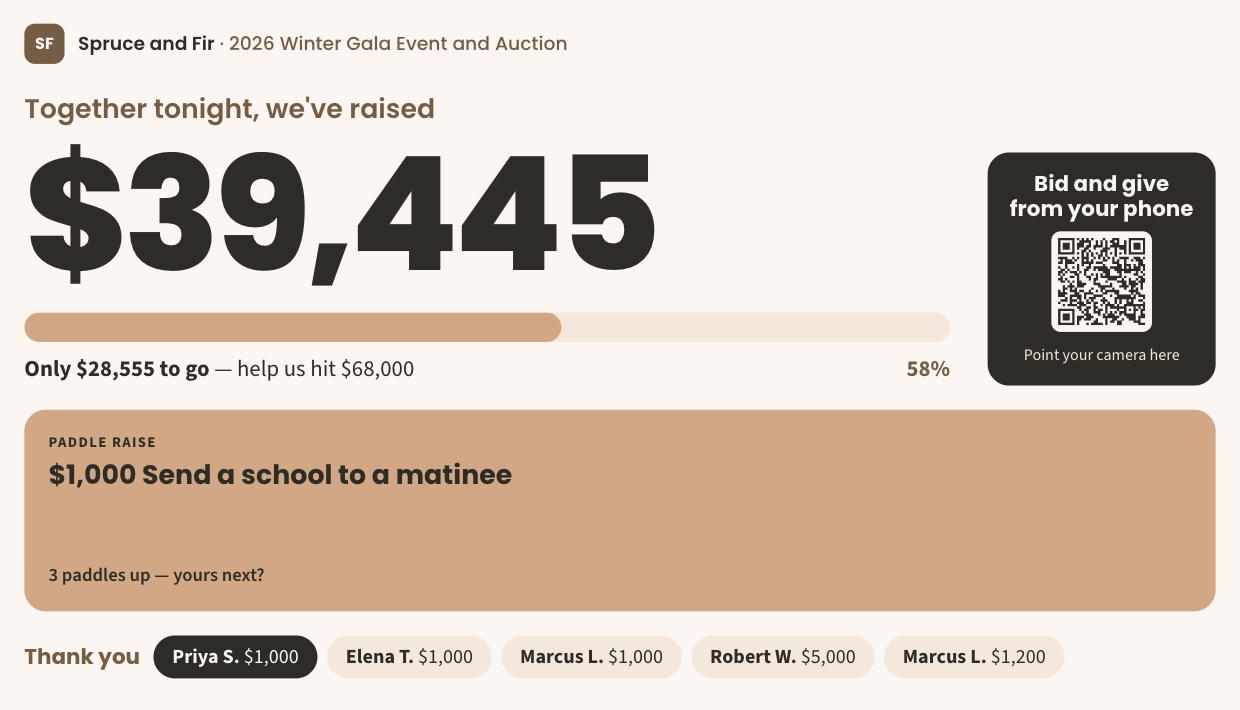
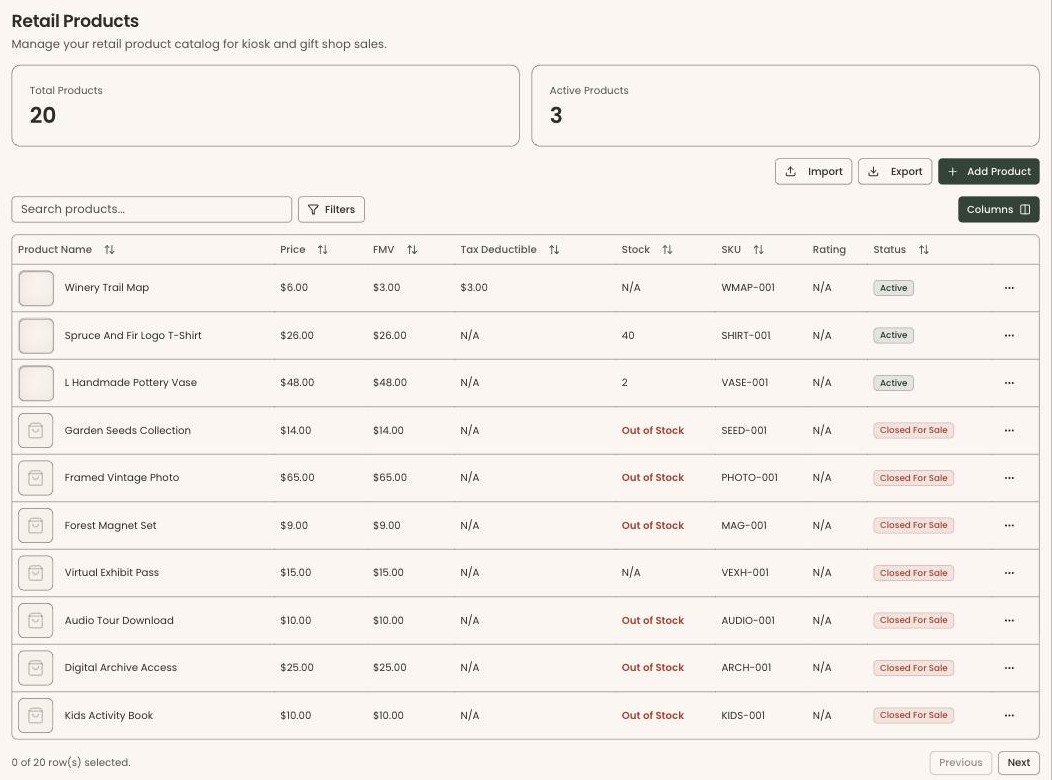
What it does well: you set an admission price for every kind of visitor, and prices that need proof are marked for verification so staff know to ask. Free admission is a membership benefit you set per tier, including how many guests a member can bring, and the visitor dashboard shows daily counts by price tier. The gift shop sells books and prints at the same kiosk, with stock counts, SKUs and a fair market value on each product, and a member's shop purchases sit on the same record as their membership and donations.

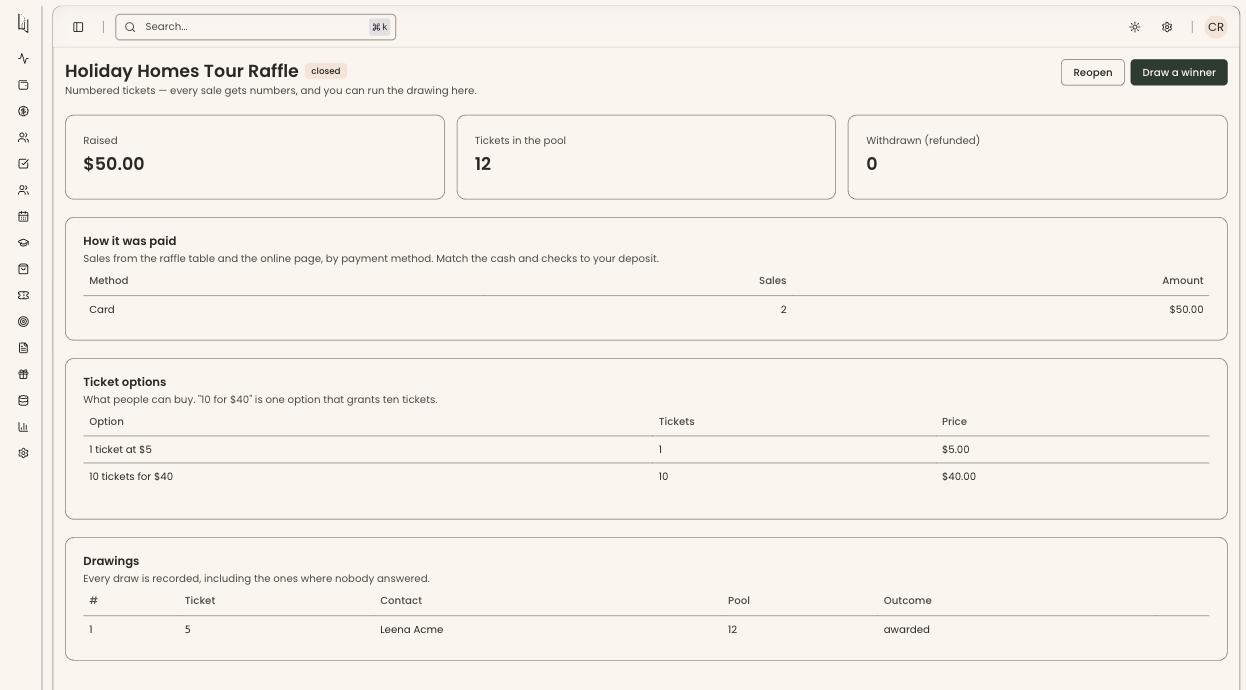
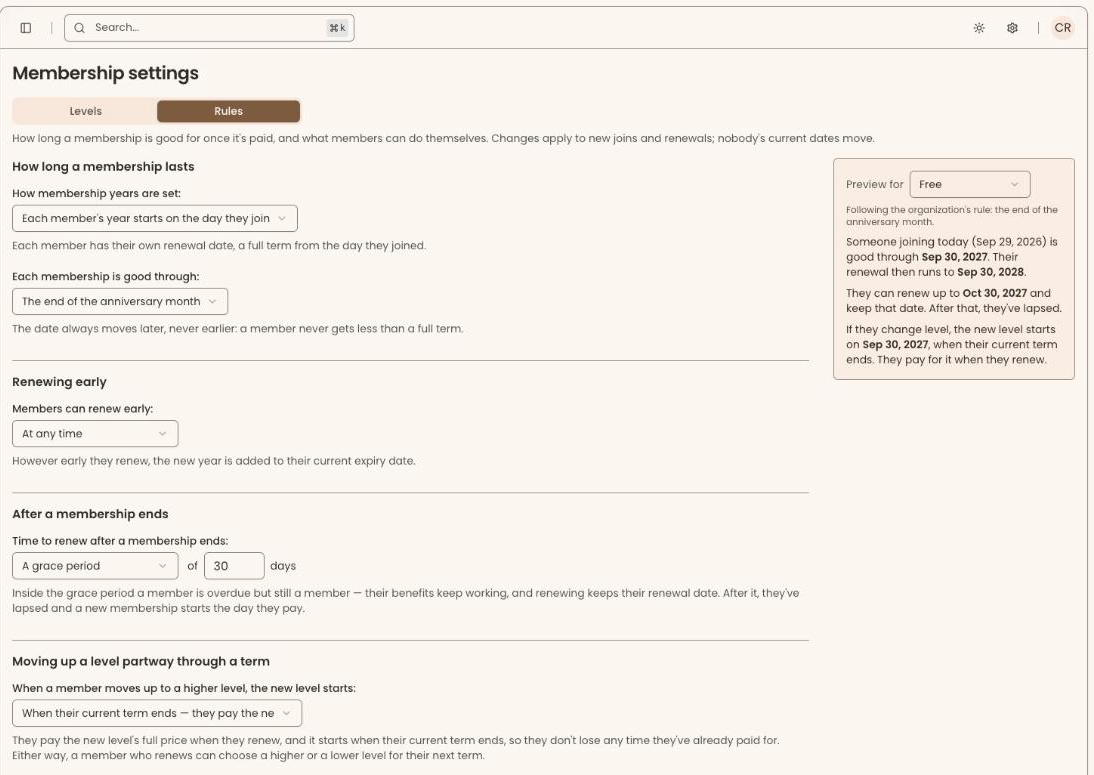
Memberships follow rules you set: monthly payments, a discount for turning on auto-renew, gift and complimentary memberships, and how renewals, upgrades and lapses behave. Lectures, classes and camps run from the same account, and so does the gala, with silent and live auctions, paddle raises and raffles. See Clerestory for museums and historical societies and how membership rules work in Clerestory.
Limits: no time slots for walk-up admission (timed sessions with a capacity can be sold as an event series), no reserved seating, no collections management and no reciprocal networks. The section below spells these out.
Blackbaud Altru
Who it fits: a larger cultural institution that needs timed entry and group sales and is prepared for a quoted, custom-priced system.
Pricing model: quote only. The Altru product page offers "Ask About Pricing" and a demo form, as of September 2026. Blackbaud's pricing page says "Blackbaud pricing is customized based on your organization's size, goals, and the solutions you need" and that it provides "a personalized quote."
What it does well: the product page describes "Ticketing, memberships, donations and group sales," "Online, in-person, and back-office sales," and "special considerations for members, advanced purchase, timed entry."
Limits: the product page does not name the gift shop or collections management, and the software price is not published, so its all-in cost cannot be worked out in advance. Our Clerestory vs Blackbaud Altru comparison goes through Blackbaud's own documentation row by row.
Doubleknot
Who it fits: museums, zoos, aquariums, nature centers and science centers that need timed-entry capacity control alongside memberships.
Pricing model: we found no published price on its home page, museum software page or point-of-sale page as of September 2026. The home page directs you to request a demo.
What it does well: the museum software page says you can "Manage your facility's capacity with timed-entry ticketing," "Set admission prices for different visitor segments (members, children, seniors, etc.)" and "Offer tiered membership pricing, flexible renewals, and digital member cards." Its point-of-sale page says you can "automatically apply member benefits and other discounts" with every transaction "recorded in the unified database and on the constituent record."
Limits: Doubleknot is candid about this one: "Doubleknot is not a platform for exhibit or collection management." Its POS page mentions merchandise but, on the page we read, does not describe gift shop inventory.
Veevart
Who it fits: a museum that wants collections management and front-of-house in one system and already uses, or is willing to use, Salesforce.
Pricing model: quote only. Its pricing page says "Veevart pricing is tailored to your organization's size, needs, and goals," based on "institution size, users, modules, and operational needs," as of September 2026.
What it does well: its home page lists "Fundraising, Ticketing, Shop, Rentals, Collection Management and a powerful POS," and says the platform is built on Salesforce. Its ticketing page says you can "Manage capacity with time slots and direct group booking" with "automatic member discounts, online and at front desk."
Limits: the price is not published. Being built on Salesforce is a strength if your team knows Salesforce and something to ask about in setup if it does not; ask what is included in the quote.
MembershipWorks
Who it fits: a historical society or friends group that mainly needs memberships, dues, events and donations on its website, and does not run a staffed admission desk.
Pricing model: published monthly plans by number of accounts, as of September 2026: free up to 50 accounts, $35 a month up to 300, $59 up to 600, $95 up to 1,200, and more above that, per its pricing page. It says "we do not take a fee or portion of your payments"; your payment gateway charges its own card fees.
What it does well: paid plans include membership management and online payments, a member directory, members-only content, event registrations with payments, donation forms and a shopping cart.
Limits: its pricing page does not describe admission ticketing, timed entry, a front-desk point of sale or collections management. It is membership software, not museum admission software, and is best judged that way.
What Clerestory does not do
These are the main reasons a museum might choose one of the others above. Our museums and historical societies page covers what Clerestory does for museums in full.
- Collections management. Clerestory does not catalog objects. Keep your collections system for that, or look at a system like Veevart that lists it.
- Timed-entry reservations. Admission is sold at the desk and online by price tier, not by time slot; timed sessions with a capacity can be sold as an event series of dated sessions. If you need to cap walk-up attendance by the hour, Altru, Doubleknot and Veevart each state timed entry.
- Reserved seating. Clerestory does not sell seats in a seating chart.
- Reciprocal membership networks. Clerestory does not manage reciprocal admission programs with other institutions.
Which should a small museum choose?
If you need timed entry for walk-up admission, start with Altru, Doubleknot or Veevart, and ask each for a written quote with the all-in cost per dollar processed. If you need collections and front-of-house together, Veevart lists both. If your organization is mostly members and events with no admission desk, MembershipWorks publishes a simple monthly price.
If you sell admission at price tiers, let members in free, run a gift shop and hold an annual gala, and want one record per visitor and a price you can read before you call anyone, Clerestory is built for that. You can see the full list of Clerestory features or book a demo and we will show you the front desk with your own price tiers.
How we checked
On 30 September 2026 we read each vendor's own product and pricing pages, linked above. Where we could not confirm a detail on the vendor's site, we left it out. We also looked at CivicTicketing and Wild Apricot but could not load their pages to verify, so they are not included. Clerestory screenshots are from a demo organization with test data. Products change; if anything here is out of date, tell us and we will correct it.
Frequently asked questions
What is the best museum admission software for a small museum?
It depends on whether you need timed entry. As of September 2026, Blackbaud Altru, Doubleknot and Veevart each state timed-entry ticketing, and all three quote prices rather than publishing them. Clerestory sells admission by price tier with free member admission and the gift shop on the same record, for 3% per transaction, and does timed entry only in part: walk-up admission is sold by price tier, not by time slot, and timed sessions can be sold as an event series.
Is there an Altru alternative for small museums?
Yes. Clerestory, Doubleknot and Veevart all sell admission and memberships. Clerestory publishes its price, 3% per transaction on your own Stripe account plus Stripe's processing, with no license fee or contract. As of September 2026, Blackbaud does not publish a price for Altru.
What membership software works for a historical society?
A historical society with an admission desk and a gift shop needs admission, memberships and retail on one record, which Clerestory provides. A society that is mostly members and events with no admission desk may be well served by membership software such as MembershipWorks, which publishes monthly plans by number of accounts as of September 2026.
Can members get free admission automatically?
In Clerestory, free admission is a membership benefit you set per tier, including how many guests a member can bring. As of September 2026, Doubleknot says it applies member benefits automatically and Veevart says it applies member discounts automatically.
Does Clerestory do collections management or timed entry?
Not collections management, and timed entry only in part. Clerestory does not catalog objects, sell walk-up admission by time slot, sell reserved seats or manage reciprocal membership networks; timed sessions with a capacity can be sold as an event series of dated sessions. Keep your collections system for cataloging.