

Your entity, your receipts
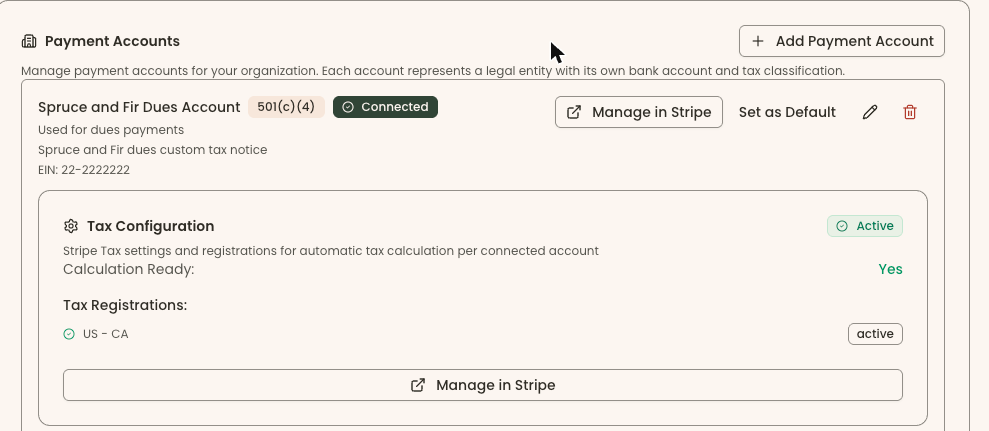
Your organization processes payments on its own Stripe account, and your receipts carry your name and tax classification. If you run more than one entity, such as a Friends group and a separate endowment, each is its own payment account with its own bank account, EIN and receipt wording, on the same Clerestory organization.
Memberships that people renew
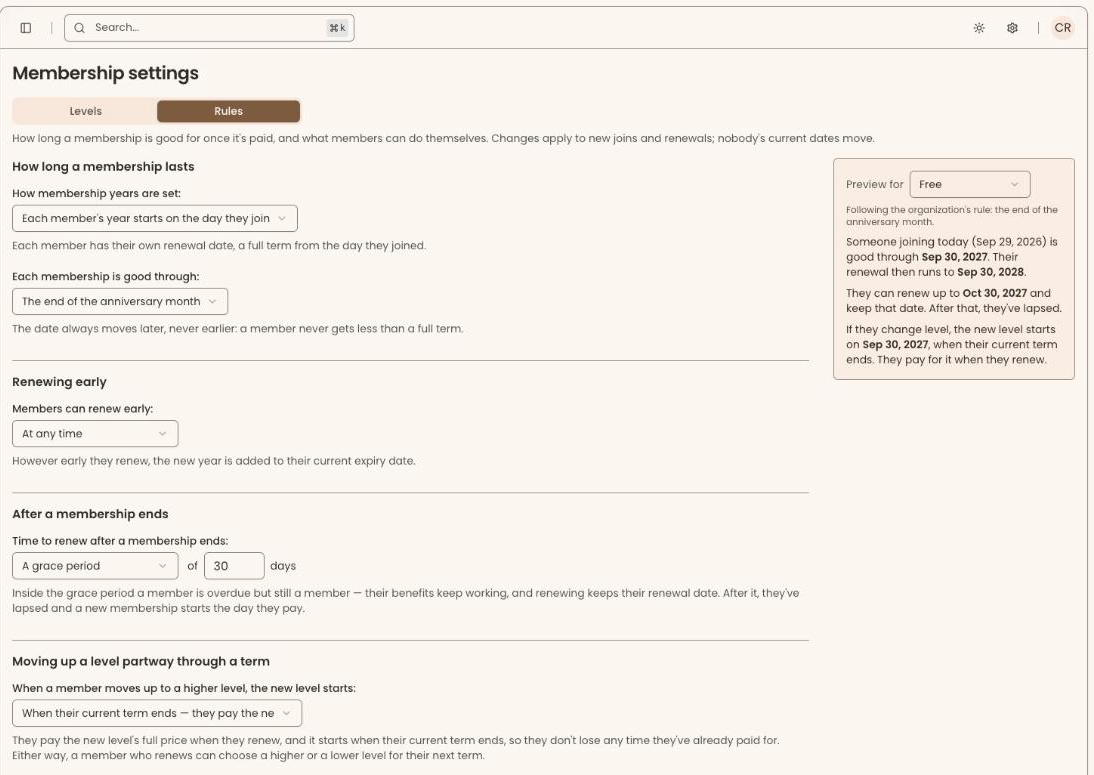
Friends groups live on membership. Set up tiers with their own term, price and benefits, offer monthly payments or an auto-renew discount, and give complimentary memberships to volunteers and trustees. Set the rules for renewals and lapses yourself.
The book sale and the shop
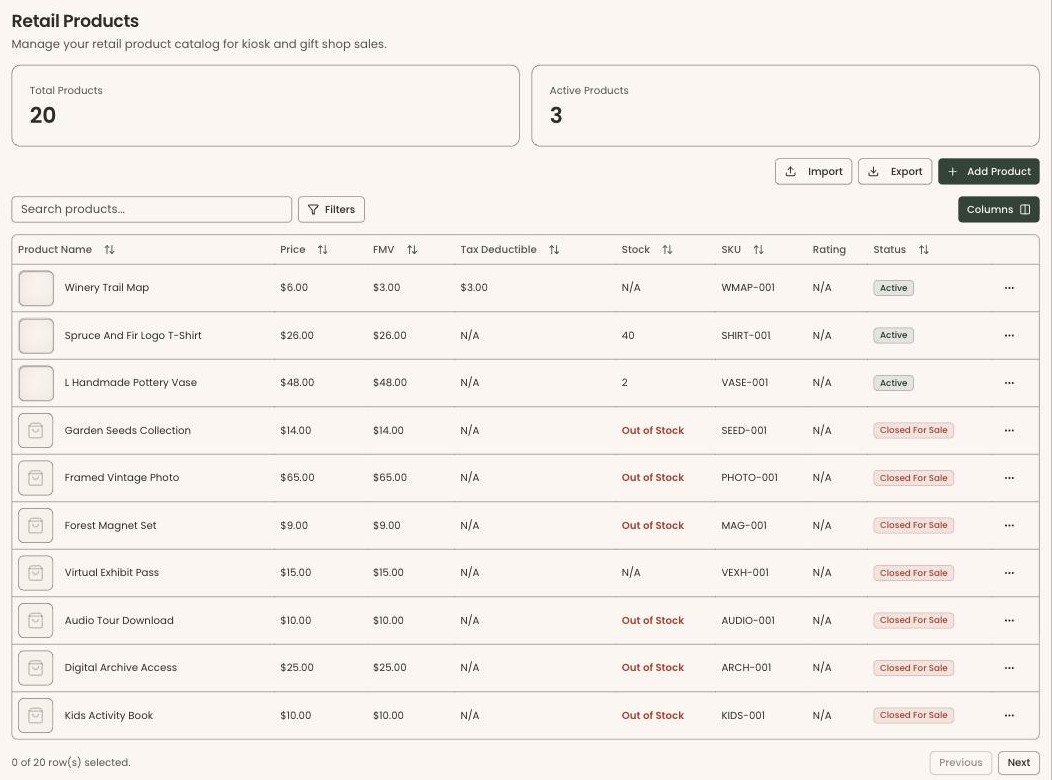
Sell used books, tote bags and merchandise at a kiosk or on a card reader, with stock and SKUs if you want them, or a simple price if you do not. Purchases land on the buyer's record next to their membership.
Author talks, galas, auctions and raffles
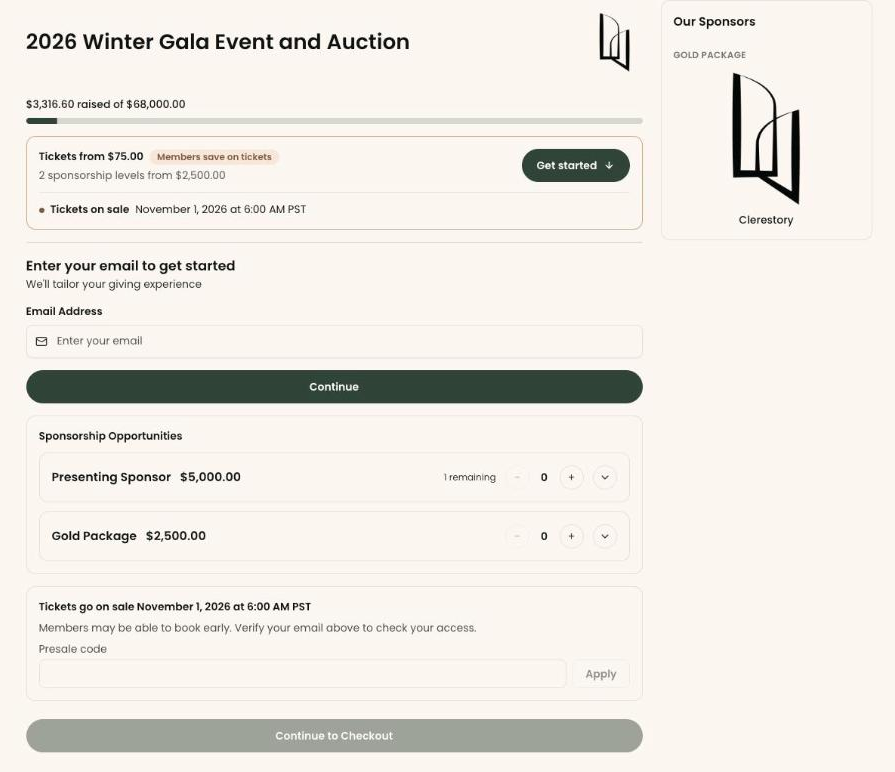
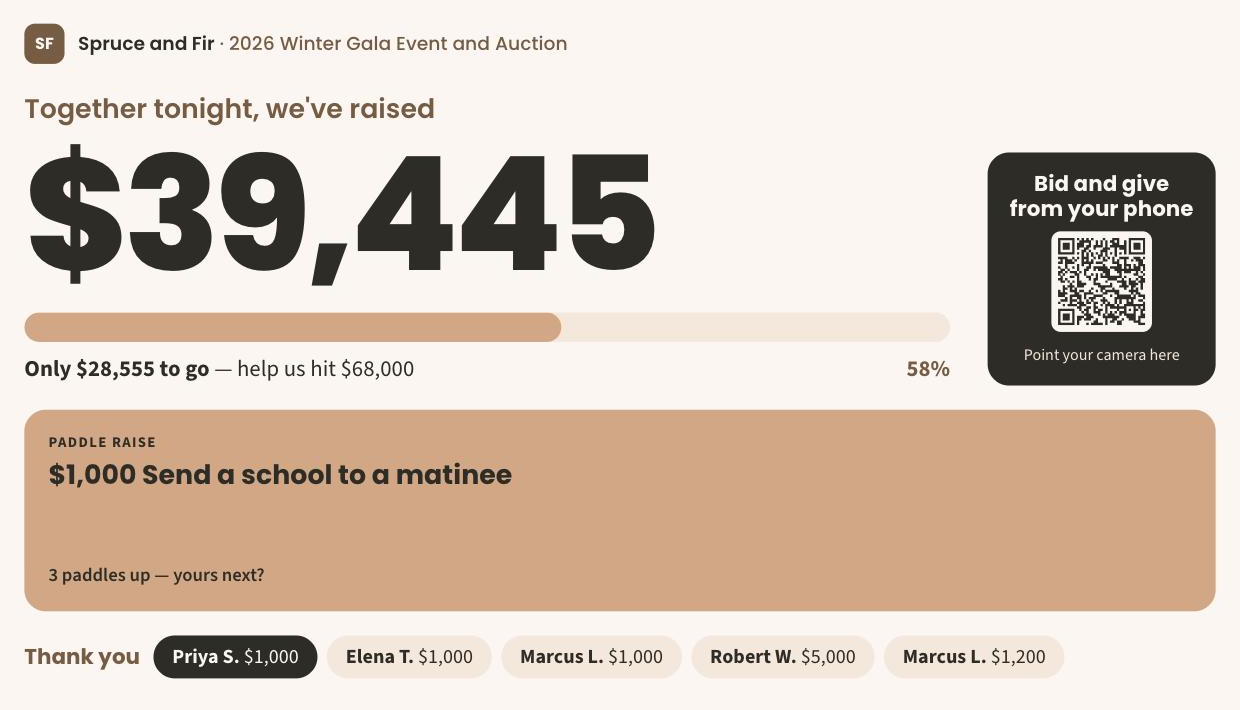
Sell tickets to an author series from one box office page, with member pricing applied automatically. Run the annual gala with a silent auction on guests' phones, a live auction and paddle raise by bidder number, and one batch charge at the end of the night. Put the room screen on the big display and everyone can watch the total climb toward the goal, scan a QR code to bid and give, and see a thank-you as each gift comes in.
Sell raffle tickets online and at the table, and record the drawing with the winning ticket, so there is a record of how the winner was chosen. Check your state's rules on raffles before you run one.
Donations, pledges and year-end letters
Take one-time and recurring gifts online, and record pledges, cash and checks by hand. The Year-End Giving Summary gives you each donor's total, the value of anything they received and the deductible amount, with mailing addresses for your letters. Reports can be emailed on a schedule to your treasurer.
What Clerestory does not do
- Grant-making. If your foundation makes grants, Clerestory does not manage applications or disbursements.
- Fund accounting. Clerestory syncs payments to QuickBooks Online. Restricted and designated funds are tracked in your accounting system.
What it costs
Clerestory charges 3% per transaction, on your own Stripe account, plus Stripe's processing. Donors can choose to cover the fees at checkout. If you refund a payment, our 3% comes back with it.
Frequently asked questions
Can a Friends of the Library group take payments under its own EIN?
Yes. In Clerestory, a Friends group processes payments on its own Stripe account, and receipts carry the group's own name and tax classification, not the city's.
Can a support foundation run a Friends group and an endowment in one account?
Yes. In Clerestory, each entity, such as a Friends group and a separate endowment, is its own payment account with its own bank account, EIN and receipt wording, on the same organization.
Can a Friends group run its used book sale in Clerestory?
Yes. Clerestory sells used books, tote bags and merchandise at a kiosk or on a card reader, with stock and SKUs or a simple price, and purchases land on the buyer's record next to their membership.
How does a Friends group prepare year-end giving letters?
Clerestory's Year-End Giving Summary gives each donor's total, the value of anything they received and the deductible amount, with mailing addresses for the letters. Reports can be emailed to the treasurer on a schedule.
Does Clerestory handle grant-making or fund accounting for a foundation?
No. Clerestory does not manage grant applications or disbursements. Clerestory syncs payments to QuickBooks Online, and restricted and designated funds are tracked in the accounting system.
How much does Clerestory cost a Friends group?
Clerestory charges 3% per transaction on the group's own Stripe account, plus Stripe's processing. There is no license fee, no per-seat fee and no contract, donors can choose to cover the fees at checkout, and if a payment is refunded the 3% comes back.