

Registration built for classes, not events
Every class has its own schedule, eligibility rules, pricing, registrant questions, application, waivers, roster, waitlist and attendance. Clone last term's class instead of rebuilding it. Add a student by hand, transfer them to another section, record a paper waiver, email the roster or issue a refund from the roster itself.
Members can get their own price on a class automatically, set per membership tier, so membership pays for itself for your most loyal students.
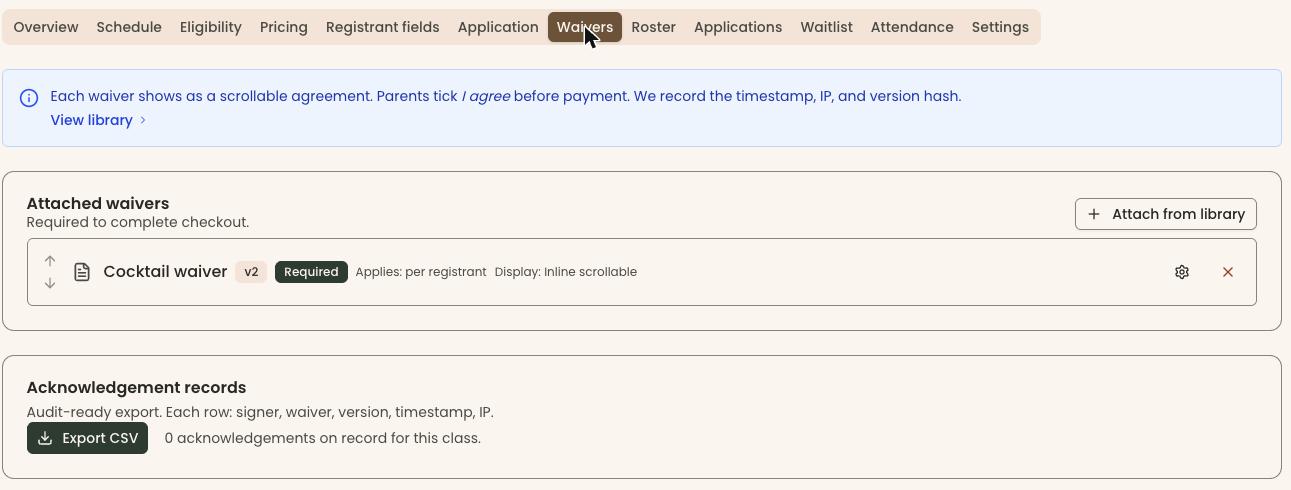
Waivers that stand up
Write a waiver or disclosure once and attach it to every class that needs it: the kiln room, the wood shop, a youth camp. Each registrant's acknowledgment is recorded, and you can export every one as a CSV.
The gallery shop
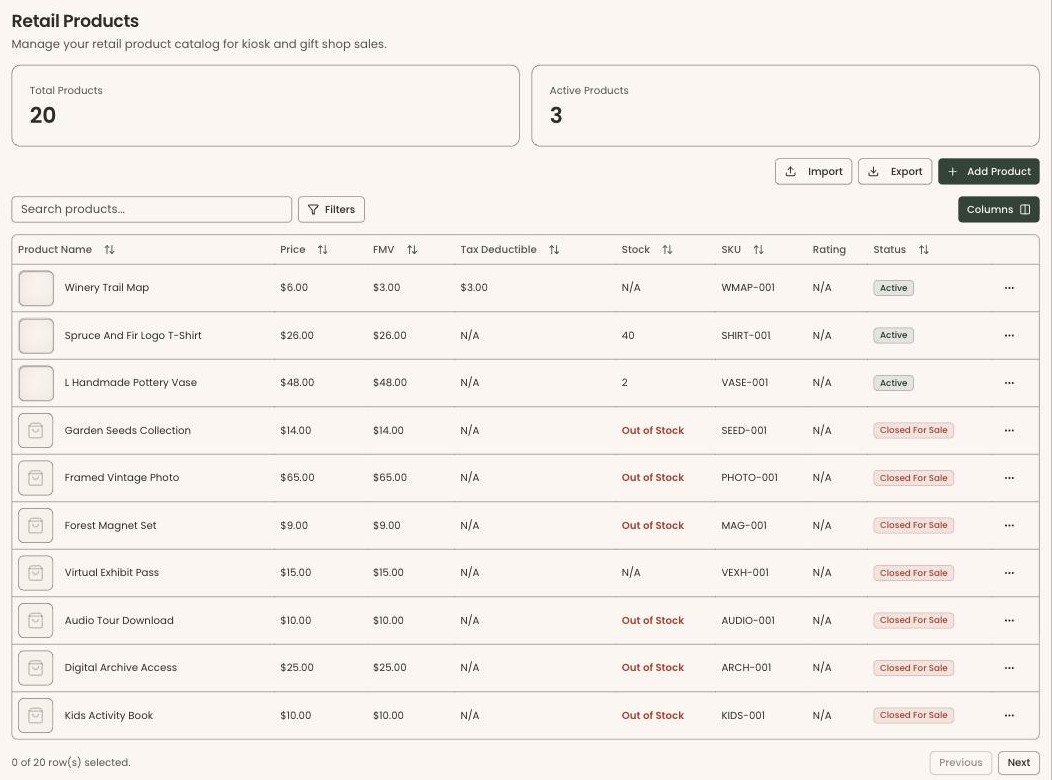
Sell work, supplies and merchandise with stock counts and SKUs, at a kiosk or on a card reader at an opening.
The benefit auction and the raffle
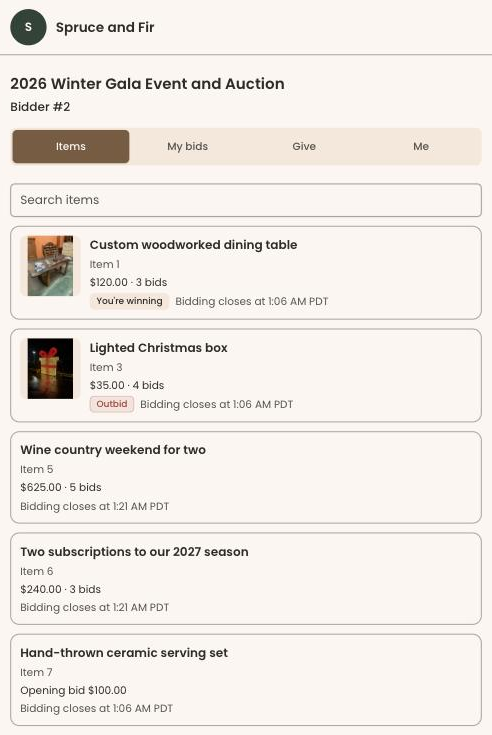
Artist-donated work goes up in a silent auction that guests bid on from their phones, with maximum bids and buy it now. The live auction and paddle raise are recorded by bidder number, and every winner is charged in one batch at the end of the night. Each guest receives one statement that separates the fair market value of what they won from what they gave.
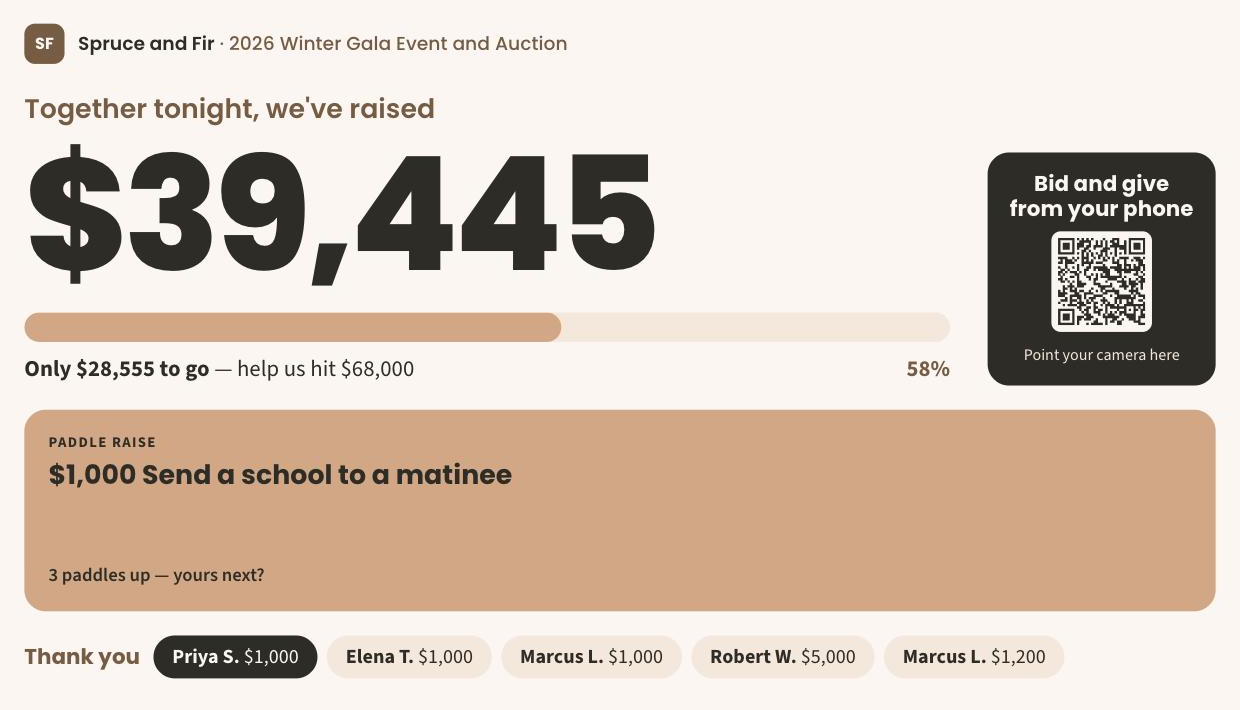
Put the room screen on the big display and everyone can watch the total climb toward the goal, scan a QR code to bid and give, and see a thank-you as each gift comes in.
Sell raffle tickets online and at the table, and record the drawing with the winning ticket, so there is a record of how the winner was chosen. Check your state's rules on raffles before you run one.
Memberships, donations and one record
Memberships, recurring gifts, class fees, shop purchases and auction wins all sit on one donor record. When you plan an appeal, you can see which families have spent years in your classes but never given.
What Clerestory does not do
- Reserved seating and season subscriptions. If you run a theater, Clerestory sells general admission tickets, not seats on a map.
- Artist consignment payouts. Clerestory records sales but does not calculate or pay artist commissions.
- Instructor payroll. Use your payroll provider for that.
What it costs
Clerestory charges 3% per transaction, on your own Stripe account, plus Stripe's processing. Donors can choose to cover the fees at checkout. If you refund a payment, our 3% comes back with it.
Frequently asked questions
What class registration software works for an arts center or art school?
Clerestory is built for arts center class registration: every class has its own schedule, eligibility rules, pricing, registrant questions, application, waivers, roster, waitlist and attendance. Classes sit on the same donor record as memberships, gallery shop sales and the benefit auction.
Can arts center members get a discount on classes?
Yes. In Clerestory, members can get their own price on a class automatically, set per membership tier.
Can an arts center collect signed waivers for kiln or wood shop classes?
Yes. Write a waiver or disclosure once in Clerestory and attach it to every class that needs it, such as the kiln room, the wood shop or a youth camp. Each registrant's acknowledgment is recorded and can be exported as a CSV.
Can an arts center run a benefit auction of artist-donated work?
Yes. Guests bid on artist-donated work from their phones in a Clerestory silent auction, with maximum bids and buy it now, and every winner is charged in one batch at the end of the night. Each guest receives one statement that separates the fair market value of what they won from what they gave.
Does Clerestory pay artist consignment commissions or sell reserved theater seats?
No. Clerestory records gallery sales but does not calculate or pay artist commissions, and it sells general admission tickets, not reserved seats on a map or season subscriptions. Clerestory does not run instructor payroll either.
How much does Clerestory cost an arts center?
Clerestory charges 3% per transaction on the arts center's own Stripe account, plus Stripe's processing. There is no license fee, no per-seat fee and no contract, donors can choose to cover the fees at checkout, and if a payment is refunded the 3% comes back.